
Is it time for a metal roof? Here are the signs you need best standing seam metal roof installation in Hollis, NH — and why it might be worth the upgrade.
Metal roofing has come a long way over the past few decades. What used to be considered a commercial or industrial choice is now one of the most popular premium residential roofing options in New England. Walk through Hollis or any nearby town and you will see standing seam metal roofs on everything from historic farmhouses to modern custom homes.
But how do you know when a metal roof is actually the right choice for your home? Is your current roof telling you it is time for an upgrade? And is the higher upfront cost worth it for the long-term benefits?
Livingstone Roofing has installed standing seam metal roofs across Hollis and the broader Hillsborough County area for years, and we have noticed the patterns. Some homeowners come to us when their current roof has failed and they are weighing options. Others plan ahead because they want a roof that will outlast them. This article walks through the clear signs that point to metal roofing being the right move, along with what to expect from the installation process.
Sign One: Your Current Roof Is Past Its Lifespan
The most obvious sign is age. Asphalt shingle roofs in New Hampshire typically last 20 to 30 years. If your current roof is past that range and showing wear, replacement is coming whether you want it or not.
If you are replacing anyway, the question becomes — replace with what? Putting another 25-year asphalt roof on a home you plan to live in for 30 more years means you will be doing this again in your lifetime. A standing seam metal roof installed today can last 40 to 70 years, often outlasting the original homeowner.
The math gets interesting when you look at it this way. Three asphalt roof replacements over 60 years often cost more than a single quality metal roof that covers the same period — and the metal roof saves you the disruption of two extra replacement projects.
Sign Two: You Are Tired of Constant Repairs
Has your current roof become a regular line item in your home maintenance budget? Lost shingles after every storm. Granular runoff in the gutters. Sealing leaks around chimneys and vents. Calling a roofer every few years to fix the latest issue.
If repair calls have become routine, the underlying roof is probably nearing the end of its useful life. Continuing to patch failing materials is rarely cost-effective at that point.
A 2023 industry study by the Metal Roofing Alliance found that homeowners with standing seam metal roofs reported 75 percent fewer repair calls during the first 20 years compared to homeowners with asphalt shingle roofs of similar age. The reduction in maintenance costs and the time saved coordinating repair appointments matters in real life, not just on paper.
Sign Three: You Have Had Ice Dam Problems
Ice dams are one of the most damaging winter problems for homes in New Hampshire. Heat escapes from the attic, melts snow on the upper roof, water flows down to the cold eaves and refreezes — eventually forcing water back up under shingles and into the home.
Standing seam metal roofs handle ice dams differently than asphalt shingles. Snow tends to slide off metal surfaces more readily, reducing the snow accumulation that creates ice dams in the first place. The interlocking standing seams also do not allow water to wick backward the way overlapping asphalt shingles can.
This does not mean metal roofs are immune to ice dam issues. Proper attic ventilation and insulation still matter. But homeowners who have struggled with chronic ice dam damage on asphalt roofs often see significant improvement after switching to standing seam metal.
Sign Four: You Are Planning to Stay in the Home Long-Term
Standing seam metal is a premium investment that pays back over decades. If you are planning to sell your home in the next 3 to 5 years, the math may not work in your favor — you will not recoup the full premium at resale.
But if you plan to stay 15, 20, or 30+ years, the long lifespan, low maintenance, and energy benefits compound over time. The cost per year of service often beats asphalt despite the higher upfront price.
Here is a comparison of cost-per-year service for common roofing materials:
| Roofing Material | Installed Cost per Sq Ft | Typical Lifespan | Cost per Year |
| Architectural asphalt | $4 – $8 | 25 – 30 years | $0.15 – $0.30 |
| Premium designer asphalt | $7 – $12 | 30 – 40 years | $0.20 – $0.35 |
| Standing seam metal (steel) | $9 – $14 | 40 – 60 years | $0.20 – $0.30 |
| Standing seam metal (aluminum) | $11 – $16 | 50 – 70 years | $0.20 – $0.30 |
| Standing seam metal (copper) | $20 – $40+ | 75 – 100+ years | $0.25 – $0.45 |
For long-term ownership, the cost-per-year math heavily favors metal.
Sign Five: Your Home Has a Steep Pitch or Complex Roofline
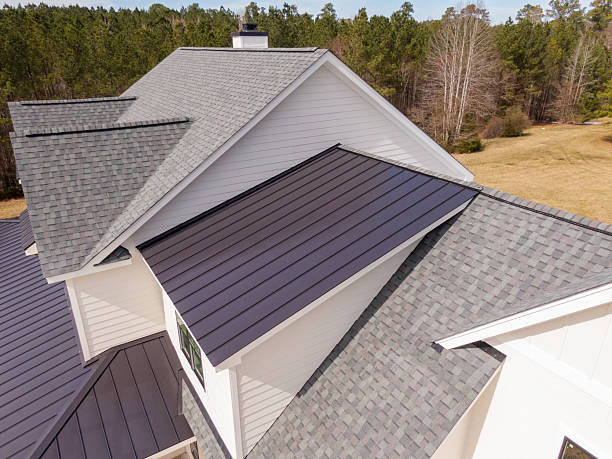
Standing seam metal roofs perform exceptionally well on steep pitches and complex rooflines. Water sheds rapidly. Snow slides off readily. Debris does not collect in valleys the way it does on shingled roofs.
For homes with significant valleys, multiple dormers, or steep pitch sections, standing seam metal often outperforms asphalt by a wider margin than on simple gable roofs. The cost premium becomes more justified on complex roofs because the metal installation handles the geometry better over time.
For homeowners in this area, our team handles best Standing seam metal roof installation in Hollis, NH with experience on complex residential rooflines and historic homes throughout the region.
Sign Six: Energy Costs Matter to You
Standing seam metal roofs reflect significantly more solar radiation than asphalt shingles. This matters for summer cooling costs, especially on homes with darker asphalt roofs that currently absorb heat into the attic.
A 2022 study by the Florida Solar Energy Center found that homes with reflective metal roofs saw average summer cooling cost reductions of 15 to 25 percent compared to similar homes with traditional dark asphalt roofs. The savings were even larger in homes with poor attic insulation.
In New Hampshire, the cooling savings are smaller than in southern climates but still meaningful. The bigger energy story for this region is often about reducing ice dam risk, which protects the home from much more expensive water damage.
Sign Seven: You Want a Roof That Looks Distinctive
Standing seam metal has a clean, modern aesthetic that fits many home styles — modern, contemporary, farmhouse, and even traditional New England designs. Colors range from neutral grays and blacks to deep reds, greens, and blues.
Metal roofs become visual signature features on homes. Architectural design magazines increasingly feature standing seam metal as the roofing choice for high-end residential projects across the country.
If your home is in a neighborhood where roofs are mostly unremarkable, a quality standing seam metal roof can give your home a distinctive look that contributes to its overall value.
Sign Eight: You Are in a Wildfire-Prone or Heavy Storm Area
Hollis sits in an area with significant tree cover and wildland exposure. While New Hampshire is not California in terms of wildfire risk, the combination of dry summer conditions and dense forest does create vulnerability.
Metal roofs are Class A fire-rated — the highest rating available. They do not ignite from flying embers the way some asphalt and wood shake roofs can. For homes with significant tree coverage or in fire-prone areas, the fire resistance is a meaningful benefit.
Metal roofs also handle high winds extremely well. Properly installed standing seam systems are rated for wind speeds of 140 mph or higher, significantly above typical asphalt shingle ratings.
What Standing Seam Metal Roofing Actually Is
A quick technical note for context. Standing seam metal roofing consists of long vertical panels with raised seams where they join. The seams stand above the surface of the roof, providing watertight connections that handle expansion and contraction with temperature changes.
The most common metals used in residential standing seam roofs are:
Galvalume steel — a steel substrate coated with aluminum and zinc for corrosion resistance. Most common and most cost-effective.
Aluminum — lighter than steel and more corrosion-resistant. Common in coastal or high-humidity areas.
Copper — premium choice with the longest lifespan and a distinctive patina that develops over time.
Zinc — high-end metal that develops a self-healing patina. Long lifespan.
For most Hollis homeowners, Galvalume steel offers the best balance of cost, lifespan, and appearance.
What to Expect from the Installation Process
Standing seam metal roof installation takes longer than asphalt shingle installation. Expect 3 to 7 days for an average residential project, with larger or more complex roofs taking longer.
The process involves:
Tear-off of the existing roof and inspection of decking.
Installation of synthetic underlayment with ice and water shield along eaves and valleys.
Installation of starter trim along eaves.
Custom-cut and formed metal panels installed from bottom to top.
Mechanical seaming of panels at the standing seam joints.
Flashing details at chimneys, walls, vents, and other penetrations.
Ridge cap installation to finish the top edges.
Standing seam installation requires specialized skills. A quality contractor with metal roofing experience is essential — this is not work to hand off to a general asphalt roofer.
Final Thoughts
The signs above are not subtle. If your current roof is failing, your repair calls are becoming routine, you have struggled with ice dams, or you simply want a roof that will outlast multiple replacement cycles of asphalt, standing seam metal is worth serious consideration. The upfront premium is real but the long-term value math works in favor of metal for homeowners planning to stay in their homes. New Hampshire’s climate is well-suited to standing seam metal roofing, and the technology has matured to the point where quality installations regularly last 50 years or more with minimal maintenance.
Our team offers Experts Standing seam metal roofing in Hollis, NH with detailed written estimates, full manufacturer warranties, and the kind of installation quality that makes the lifespan benefits actually show up in real-world performance. If you are considering a metal roof for your home or want a professional assessment of whether it makes sense for your specific situation, reach out and we are happy to walk you through your options.
Frequently Asked Questions
How much does standing seam metal roofing cost compared to asphalt?
Standing seam metal roofing typically costs 2 to 3 times more than architectural asphalt shingles on a comparable home. A $12,000 asphalt roof might be $25,000 to $35,000 in standing seam metal. The upfront premium is real but the lifespan is also 2 to 3 times longer, so the cost per year of service is often similar or better than asphalt. For long-term ownership, the math typically favors metal.
Are metal roofs noisy during rain in New Hampshire?
This is the most common misconception about metal roofing. Modern residential standing seam systems include underlayment, decking, and attic insulation that absorb sound effectively. The noise level inside a home with a properly installed metal roof is comparable to a home with an asphalt roof. Older barn-style metal roofs without proper substructure are where the loud rain myth came from.
Will a metal roof affect my home insurance in Hollis?
Most insurance carriers in New Hampshire treat metal roofs favorably because of their fire resistance, wind resistance, and hail resistance. Some carriers offer premium discounts for metal roofs, especially impact-resistant ones. Always notify your insurance carrier when you replace your roof to confirm coverage continues and to potentially benefit from any rate adjustments.
How long does standing seam metal roofing actually last?
Properly installed standing seam metal roofs in New Hampshire typically last 40 to 60 years for steel systems, 50 to 70 years for aluminum, and 75 to 100+ years for copper and zinc. The lifespan depends heavily on installation quality, the metal substrate, and the coating system used. Quality manufacturer warranties on premium metal systems often extend to 40 or 50 years.
Can I install solar panels on a standing seam metal roof?
Yes, and metal roofs are actually one of the better surfaces for solar panel installation. The standing seams allow for clamp-based mounting that does not require penetrating the roof — a major advantage over asphalt where every mounting bracket means a potential leak point. If you are considering solar in the next 20 years, a metal roof simplifies that future installation significantly.